JFK’s approach to the Cold War
JFK’s coming to power:
· In 1960, it was the first televised presidential election. · Kennedy was in good health and tanned
· Nixon looked ill and sweaty, he had just had a flu
· People watching on the TV knew that JFK had won, people on the radio thought that Nixon had one
· JFK won by the slimmest margins, the only closer margin was Al Gore vs Bush
Kennedy’s views:
· He thought that Eisenhower was not a dynamic enough to stop communism
· JFK said he would “pay the price” to meet the challenges the USSR proposed
Kennedy’s military policy:
· He invested in nuclear weaponry
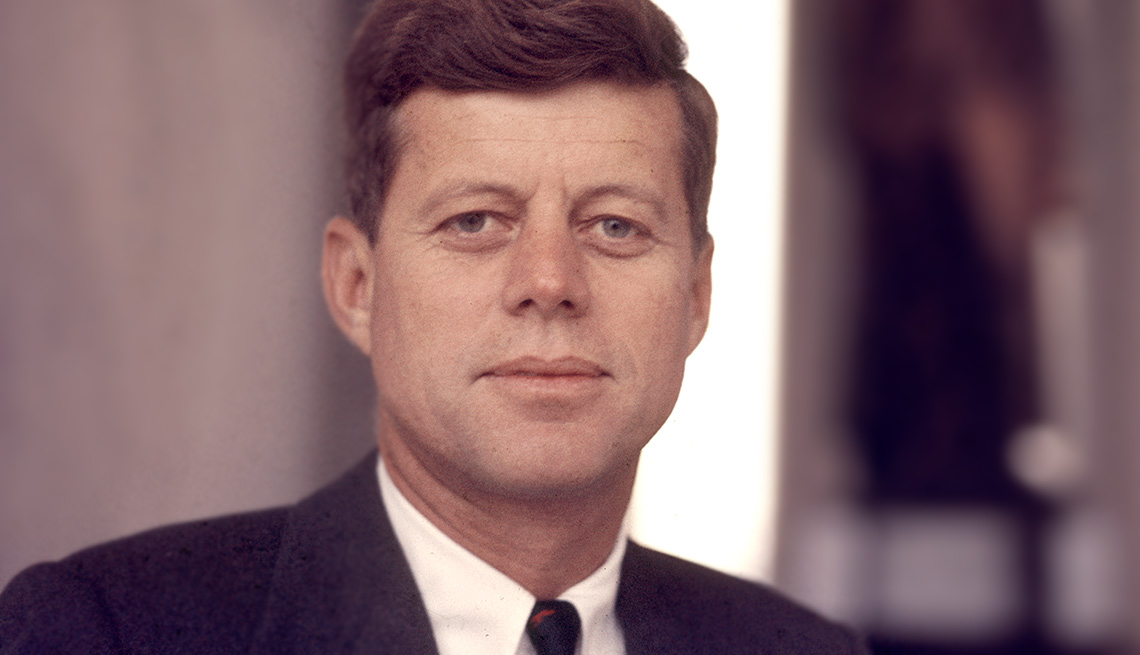 |
| Hello handsome |
· Increased ICMBs from 200 to 1,000 by 1967
· He actions created the greatest arms race ever
· In 1960 each nation had enough nuclear weapons to deter the other, but neither had a first strike capacity (the ability to attack so hard that they couldn’t retaliate)
· The rebirth of the arms race made both countries close to a first-strike capacity, meaning the more spent on nuclear weapons made the nation more unsafe
· Kennedy also wanted a large standing army that could engage in a crisis
· The flexible responsepolicy needed a standing army
· Increased military spending from $40bn to $57bn
· Summer of 1961 he increased the military budget by $3.2bn, tripled draft calls, increased the size of the armed forces from 300,000
· Sent 40,000 troops to Europe
· Picked Robert McNamara as Secretary of Defence
JFK’s policy:
· Large conventional military
· Flexible response
· Guerrilla warfare
 |
| I wonder whether JFK will be this flexible... |
Flexible response:
· Aimed at deterring war by using diplomatic settlements to help non-communist countries
· Provide counties with financial and limited military aid, exchange programmes, assistance in economic planning etc
· Show that capitalism was better than communism
Soviet aggression could still be deterred through nuclear threat
· Show that capitalism was better than communism
Soviet aggression could still be deterred through nuclear threat
· More expensive than Massive Retaliation
Berlin:
· Kennedy began at a weak point as he had just failed at the Bay of Pigs and had to deal with Khrushchev’s threat to sign a peace treaty with East Germany
· Khrushchev then demanded that Berlin should be neutral
 |
| Banky's first work |
· Kennedy held his ground and demanded that the US should have the right to be in West Berlin as they liberate it during the war
· Khrushchev threatened the peace treaty again
· JFK demanded that the National Security Council, the State Department and the CIA look at Berlin as a priority and he increased armed forces spending by $3.25bn
· However privately Kennedy said that a wall would not been seen as an act of aggression
· This shows that he wants to be seen as strong and war ready to the public but in private he was willing to mitigate the situation
· The Soviets began to erect barbed wire fences and place tanks outside Berlin
· Kennedy kept quiet and didn’t make a statement for a week
· Kennedy had left East Berlin in the hands of communism but he was able to prevent it from spreading to West Berlin
· Kennedy- “a wall is a hell of a lot better than war” · Kennedy had reduced tensions but also continued containment
Cuba:
the Bay of Pigs Kennedy tried to look like he was not involved, but he failed and it was clear the JFK and lost publicly
· A missile launch pad was discovered in Cuba
· He put together the Executive Committee (Ex Comm) tasked with avoiding a nuclear exchange, avoiding Russian response elsewhere and removing the missiles and saving face
· Options were whittled down to an airstrike then a ground force invasion
· Or a blockade to prevent further nuclear build-up
 |
| He loves the Cubans |
Pressure form the Joint Chief of Staff and Dean Acheson
· Kennedy agreed with Robert Kennedy, his younger brother on Ex Comm, to introduce blockade with the argument that the response to the missiles could start with a blockade and increase with more direct action if needs be
· JFK consulted NATO allies then went on TV saying that Cuba was under ‘quarantine’ meaning all ships into Cuba would be searched by the US NAVY
· Kennedy warned Khrushchev that any nuclear strike from Cuba to the western hemisphere would be seen as an act of aggression constituting war
· This policy didn’t deal with the missiles already in Cuba
· Tensions rose as Soviet ships continued to sail to Cuba
· A U2 spy plane was shot down over Cuba
· Instead JFK and bobby Kennedy met with Anatoly Dobrynin the Soviet ambassador
· They told him that the US was willing to remove the Turkish missiles in the future but it couldn’t be done publicly
· This offer was accepted
· Kennedy had yet again
· Kennedy change his policy on speaking with the Soviets
 |
| Bye bye bombs, hello a sprinkling of diplomacy |
· Instead of announcements of power and military force Kennedy would speak of the need for better relations, peace and arms reduction
· In 1963 the Test Ban Treaty was signed between Britain, the US and the USSR in which it banned the testing of nuclear weapons in the atmosphere, underwater or in space
· Khrushchev also wanted better communication between the superpowers to make the war less likely
· As a result, a ‘hotline’ was established between the Kremlin and the Whitehouse that could be used in the event of a crisis
Vietnam:
· Publicly supported containment in Vietnam, agreed with the domino theory
· Disagreed with massive retaliation
· Argued a flexible response
· Nuclear weapons couldn’t fight against a communist insurgency
· Supported counterinsurgency methods, tactics used to win guerrilla or unconventional wars
· Met with Eisenhower in January 1961 discussing the transition between the presidency
· Eisenhower spoke of the Bay of Pigs and that Laos was key
· Kennedy made the same mistake by seeing all forms of communism as Russian/Chinese communism · Deputy Security Advisor, Walt Rostow and General Maxwell Taylor was sent to assess the situation in November 1961 they decided that; more helicopters were needed, the South Vietnamese army needed more training, they needed more US combat troops and some strategic bombing of North Vietnam.
· Kennedy took the advice and increased the US military advisors to help to train the South Vietnamese troops
· Kennedy had choses counter-insurgency
· The US tried to make the advisors promise that Diem would introduce reforms to make his government more liked and fairer
· By December 1961 there were 3,000 US military advisors in South Vietnam
· By the end of 1962 there were 11,500 military personal and there were US pilots flying combat missions in Vietnam, but Kennedy denied this
· Diem became more or a liability, like the French of before
· He was catholic and had little religious tolerance, which alienated the vastly Buddhist population
· Diem said that he had no intension of scaling down the repressive nature of his government
· As a response the US announced that thousands of military personal would be removed by the end of 1963
· 1stNovember 1963 the South Vietnamese rebels surrounded the presidential palace and seized key facilities in Saigon
· Diem and his brother fled to a church but when they were being picked up they were assassinated
· Kennedy was so shaken that he removed himself from the meeting discussing it
· Kennedy was assassinated three weeks later
· Robert McNamara theorised that if Kennedy had lived then he would have allowed the Vietnam War as he had been so affected by the Bay of Pigs, the Cuban Missile Crisis and events in Berlin, he had shown how he was capable of standing up to the military and taking non-military actions to avoid war
 |
| Vietnam man! You weren't there |
Was Kennedy going to withdraw?
 |
| I am the US army get me out of here! |
Yes:
· Robert McNamara the Secretary of Defence suggests that Kennedy was planning to withdraw, complete withdrawal of troops in Vietnam by 1965. Kennedy decided to begin withdrawing troops on the 2ndof October 50 days before his assassination
· Ngo, more American advisors than needed and at least half would be withdrawn
· Robert McNamara and Maxwell Taylor 2ndOctober 1963, programme should be established to train Vietnamese so that the US military personnel can be removed by 1965
· Policy had been training
· Kennedy approved the withdraw of 1,000 military personal by the end of 1963
· Republicans were anxious about spending abroad and they wanted to spend money in reforms · Poverty was a larger issue than war and Kennedy said while campaigning that he would work to provide more free medical services to poorer people
· Press conference 14thNovember 1963, our priority is to bring Americans home
· Kennedy speaking to close advisor Kenneth O’Donnell, he said he would become unpopular and communism may appear but he didn’t care as he didn’t want war
· Withdrawal plans were put together by Bundy, McNamara and Taylor throughout 1962 and 1963
· Faith in Diem faded after the Buddhist crisis
 |
| falling into war be like... |
No:
· Administration opposed any moved towards a diplomatic settlement
· President Charles De Gaulle proposed neutralising the south but Kennedy’s government rejected it
· Personal number in Vietnam increases, 1961: 2,600 and by 1963: 16,500 and they were mainly special forces
· Kennedy speaking at a dinner for the Economic Club, Vietnam would collapse without the US
· He feared looking weak to communism due to pressure
· Didn’t want to look like Truman and loss Vietnam · Needed a win after Bay of Pigs
· Press conference 17thJuly 1963, we are not going to withdraw from that effort as it would cause collapse
· “we have a responsibility to help this new government in every way that we can”
· In a television interview 9thSeptember 1963:
· He believed in the domino theory
· It would give an improved position for guerrilla assaults on Malaya
· “The president felt… we should win the war in Vietnam” said by Robert Kennedy
· The rest of Southeast Asia would fall
· Needed to look strong for the upcoming election
JFK was well liked. But if it wasn't for his assassination would he have been idolised so much? By the end of his leadership he had rapidly increased spending but did not successfully suppress and communist nations seeking freedom. He managed to prevent war on several occasions, Cuba and Berlin, but is that really a win? Or is it a draw with communism? And is that enough?
Very informative and entertaining (as ever!). Just remember, when considering Kennedy's approach to the arms race, he dies in 1963 so statistics going up to 1967 will be including the Johnson administration. Other than that, this is spot-on. Brilliant effort and presentation Maxwell - keep it up!
ReplyDelete